

Know your place.
A reflection on people, place and tackling inequality


I’m a proud Northerner. The North is the place where my roots are planted.
There is something grounding about calling the North East my home, especially when much of my work takes me across the UK, speaking with schools, organisations, and community leaders about the realities of poverty and the complexity of inequality in their own places or contexts.
It’s a real privilege. I learn so much from others, and I’m humbled by the trust people place in Tees Valley Education and I to walk alongside them in such important work.
But nothing compares to coming home. Back to my roots and in my place.
Usually it’s on a train, as we gradually churn above the River Tyne and the bridges come into view; steadfast, familiar, and quietly magnificent. They remind me that Newcastle is my home. A city that exists with its own people, places and profile.
Newcastle upon Tyne, like many places in the North, carries deep-seated challenges. Inequality touches arguably every community. A short drive from the ‘Toon’ and you reach Hadrian’s Wall in Northumberland, a place my family and I often visit to walk, reflect, and feel connected to something bigger.
It’s in this place that you can discover Sycamore Gap.
The tree is gone now, felled in an act that shook the nation. Two men are now imprisoned for it. But it’s the gap that remains.
A symbol of something beautiful and rooted being carved violently from its place. The tree had stood for hundreds of years. It was a magnet for artists, walkers, photographers, and families. It held stories and memories. Its absence now feels like a wound for many with connections to this place.
Place has an enigmatic power. It stirs something in all of us, grief, ambition, and identity. It helps us locate ourselves, not just on a map, but in a shared social landscape. But it also creates tensions.
Your place or mine?

The place I call home is far from new.
It is part of a living ecosystem shaped by pioneers and designers stretching back through history and way before I set foot in it. This place is never just mine alone, it belongs to generations who navigated its challenges, imperfections, and complexities. I’m sure some of these historical figures were far from flawless, yet many appear to have made a commitment at some point to shape, influence, and improve place in meaningful ways.
The North faces deep-rooted challenges, high levels of destitution, stark child poverty, but as you navigate with your own agenda perhaps it is too easy to lose sight of those that have helped to define and shape the place you find yourself in. On a visit to Newcastle you might walk over the Millennium Bridge, the world’s first tilting bridge. On your way to our academies at Tees Valley Education, you may catch a glimpse of the Transporter Bridge without realising that the prototype for all bridges like this was designed by Charles Smith in 1873 in Hartlepool.
The North East of England has long been a place of pioneers and influencers who transformed communities. Newcastle upon Tyne, a city grappling with inequalities in many neighborhoods, also carries a proud heritage of industry and innovation. It was built by those who chose to invest in their place, individuals, businesses, and communities committed to progress.
A short walk off the train from Central Station will bring you to John Dobson Street, an area shaped by industrialists like John Dobson, who invested their wealth to improve the city and its people. Nearby lies Mosley Street, famous for being the first street in the world to be lit by electric light. On 03 February 1879, Joseph Swan’s incandescent bulbs were publicly demonstrated there, illuminating the street and marking a milestone in lighting history, two decades before Thomas Edison’s more widely known American invention in another place.
It’s not just Newcastle. The North East as a region sits in a rich history of other place influencers too. Far too many to mention in this feature, but here are some notable examples I’ve often reflected on throughout my time serving communities in Teesside and across my work in the education sector.
Middlesbrough born Maud Mary Chadburn CBE (1868 –1957), was one of the earliest women in the UK to pursue a career as a surgeon. She also co-founded the South London Hospital for Women and Children in 1912 with fellow surgeon Eleanor Davies-Colley. Meanwhile, Middlesbrough MP Ellen Cicely Wilkinson (1891 –1947) was a politician who served as Minister of Education from July 1945 until her death. Earlier in her career she became a national figure playing a prominent role in the 1936 Jarrow March of the town’s unemployed to London to petition for the right to work. Her actions provided an iconic image for the 1930s and helped to form post-war attitudes to unemployment and social justice.
Place is not simply something we encounter in isolation or in the here and now.
While many of us rightly focus on the urgent and visible challenges that shape our present places, such as inequality and hardship, it’s important to remember that these issues are deeply rooted and often woven into the historical fabric of communities. Those of us striving to shift the current narrative are not the first. We walk in the footprints of others who also gave a damn about the places they called home or served; individuals and collectives who gave their time, ideas, and energy to building something better.
You may think your strategic plan or innovation is groundbreaking, but more likely, it has been shaped and supported by generations of ideas, civic infrastructure, and collective imagination that came before you, long before the language of 'social enterprise' or 'place-based' collaboration entered the conversation around your place or mine. Your so called innovation probably builds upon or intersects with ideas already being explored by others.
It’s not a question or your place or mine. It’s shared. It always has been. I think there is a need to be humble about this. Especially in the role of service to others and place.
Place isn’t made, it’s navigated

In my work with schools and organisations across the UK, I often begin with one question: “What’s the problem you genuinely care about?”
From there, we begin to map who else is also curious about, impacted by, or already working on that issue. Often, the problem relates to facets of child poverty or inequality, but sometimes it’s broader and sometimes it is less defined.
What encourages me is what happens next.
Leaders begin to map their ecosystem; not just naming partners or associations that they work with, but recognising the potential of shared responsibility. One school leader recently shared that, after a PLACE session, their senior leadership team had gained a clearer sense of what was within the school’s scope to act on and what needed to be addressed more systemically, through collaboration with others.
That, to me, is the heart of place-based leadership. Not being the solution, but understanding that you are part of it. When schools, combined authorities and social enterprises shift their view from saviour to collaborator, they open up space for new partnerships, new thinking, and more sustainable impact.
Early in our journey, we explored the idea of formalising our place-based work as a charity, Community Interest Company (CiC), or social enterprise. On paper, the case seemed sound, but we held back. Instead, we took time.
Over 18 months of listening, mapping, and analysing our local ecosystem, we asked a harder question: What would our community gain, or lose, by us stepping into that space? The answer was humbling and challenging.
Creating another organisation risked duplication, competition for limited resources, and undermining the trust and value already built by others. It also risked reinforcing an unhelpful power dynamic, one where schools are positioned as sole service providers or saviours, rather than as equal partners in a broader civic landscape. We were convinced that our communities did not want or need another charity. Instead, our communities wanted us to serve alongside the already existing charities and social enterprises to tackle harder issues.
Rather than set up a new structure, we committed instead to investing in relationships, building shared infrastructure, and strengthening the existing ecosystem. Over the 18-months at Tees Valley Education, we launched our PLACE (People, Learning and Community Engagement) initiative in partnership with the Fair Education Alliance, supported by generous investment from Bloomberg and friends such as the Rank Foundation, SHINE, and the National Lottery Community Fund. This academic year alone, we have worked with more than 6,500 school leaders and colleagues across the UK, sharing and shaping place-based understandings of inequality, rooted in lived experience and collective curiosity. But this work builds on the legacy of those who came before us. We don’t stand on the shoulders of giants, we walk in the footprints of those doing this work before us, alongside us and those ahead of us. PLACE was never meant to be ‘ours’, it was always meant to be co-created, with and for others. This I think is civic leadership and what it means to be place-based or, perhaps better worded, place navigating.
The idea that any one person or organisation is making place, on their own, in isolation might be a comforting or encouraging illusion, but it isn’t true.
You can make your home, build an organisation, or produce a glossy strategy document that sets out organisational aims and ambitions. But that is not making place. Place already exists; layered with history, complexity, memory, and meaning. It has been shaped over generations by those who came before us, and it will continue to evolve long after we’re gone.
At best, we are participants in place, co-curators of a shared space shaped by relationships, decisions, injustices, and hopefully ambition.
We can help to reimagine place, and we may work with others to find new ways of responding to its challenges. But let us do so with humility. Place is not yours. It is not mine. It is not theirs. Place is the living ecosystem we all inhabit, serve, and influence. To believe otherwise is to mistake presence for ownership and in doing so, I think that we risk diminishing both the people within it and the possibilities ahead of us.
Rooted in place
Back to that gap in the North.
The felling of the Sycamore Gap tree was an act of destruction that has caused outrage and a sense of grief across the globe. It took over just a few minutes to bring down a tree that had stood for over a century. Rooted in a dramatic landscape, on a ridge of Hadrian’s Wall, carrying with it stories, memories, and symbolism that stretched far beyond the North East and place I call home.
While the court proceedings focused on the individuals involved, the real story for me is about what was lost, and what it stirred in so many.
What made that tree matter wasn’t just its age or beauty. It was the meaning that people gave it, the memories it held, and the way it stood quietly for generations. The public grief that followed was not irrational and I’m curious about the science that appears to sit behind it.
As Professor Amina Memon of Royal Holloway says,
“When an act of mindless vandalism occurs, people struggle to make sense of it and this causes what we in social psychology call ‘cognitive dissonance’; a disconnect between beliefs (the ‘place’ of the tree in history) and the mindless act of felling it. It’s this conflict between the cognition (beliefs) and the mindless act that has fuelled anger and will have likely impacted sentencing.”
Professor Amina Memon
Department of Psychology, Royal Holloway; University of London
Deliberate harm or attacks on place can provoke deep anger. They shake our sense of permanence, safety, and responsibility. Many across the UK felt this viscerally during the racially motivated riots that tore through communities in the summer of 2024; an ugly reminder of how fragile our shared spaces can be. The emotional weight of that rupture speaks to how deeply place can live within each of us I think.
And it is in this place where I see parallels with inequality and child poverty.
Just as the Sycamore Gap tree felt like it ‘belonged’ to people, so too does the championing for justice in the places we exist. When we witness the painful violence of poverty, exclusion, or disinvestment, it creates a deep psychological and moral discomfort. Perhaps not for everybody, but it does for some.
But in our response, however well-intentioned, we risk felling some important truths ourselves. We risk dismantling a mindset that this takes others alongside us to reimagine and address the issues in place. We risk placing mental roots that tell us that we must act urgently because others have somehow failed to do so. That somehow we are the first and sole pioneers of a place known only to us.
But place has always been a collective endeavour.
Just like that tree, no initiative, organisation, or leader can grow in isolation. If we are to respond to inequality with the dignity and wisdom it demands, we must do so not as heroes, but as stewards. Curious, humble, and ready to listen.
Anger can be fuel. But I believe curiosity sustains the journey.
So yes, be furious about injustice and the harrowing rates of child poverty levels that continue to surge. But be furiously curious too.
Sit with the discomfort and with others in the process. Ask harder questions. And keep growing the relationships that make genuine, systemic change possible. Otherwise, we risk only mourning what has been lost, rather than imagining, and building, what could be. We owe it to the places that we exist in to navigate this with collective curiosity and through credible collaboration.
For me, Sycamore Gap is not defined by two vandals with a chainsaw. It is not a place permanently marked by recklessness. It is a place that continues to make me hopeful about collective agency, about the power of rootedness, and about the kind of place-making that grows slowly and will be here even when I am not.
That hope is now quite literally taking root.
The National Trust’s ‘Trees of Hope’ initiative will see 49 saplings, one for each foot of the Sycamore Gap tree’s height, planted in publicly accessible places across the UK. The stories behind each application are moving: people wrote about grief, healing, memory, and regeneration. They wrote about the emotional connection to a tree many had never even visited. And they wrote about their hopes for the next generation, for the possibility of growth even after loss.
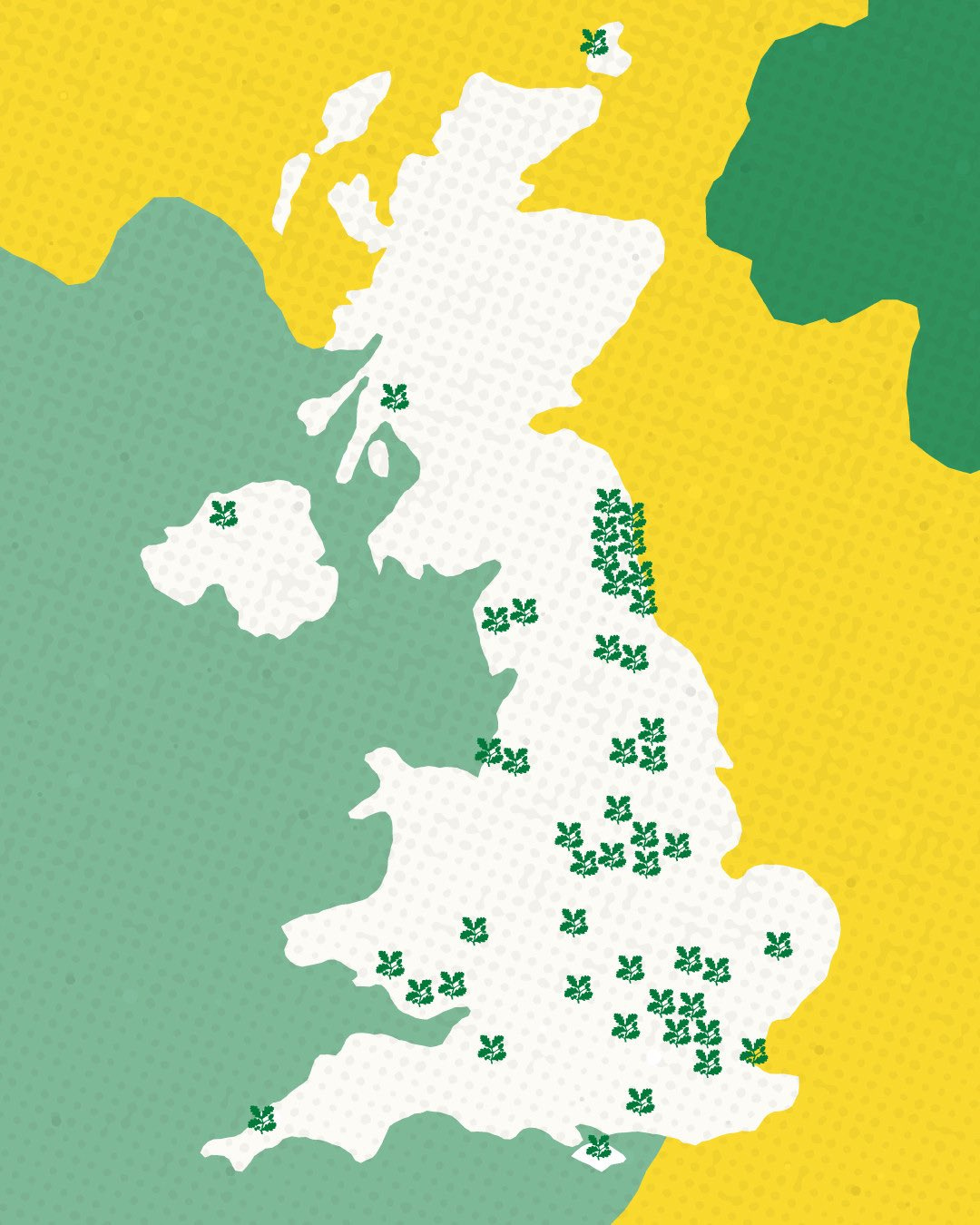
(Source: National Trust, 2025)
That is place.
Not ownership. Not isolation. But the patient, messy, evolving work of continuing to grow something with others and leaving behind more than we found in place.
Rooted in people, partnerships and especially in place.
Beyond this place…
If you’re ready to explore the value of place with me and Tees Valley Education, we’d love to hear from you. Drop me an email or note for further information
Here are a few ways we can navigate place together:
🌳Turn the page
Order Tackling Poverty and Disadvantage in Schools; a co‑authored book and guide for school leaders and educators who want to become even more “furiously curious” about inequity and transform their settings in partnership with others.
🌳Invest in place
Partner with us to channel funding and expertise into community‑led projects that uncover and address the roots of inequality across the Tees Valley and the wider North. Many are already doing this and we would welcome further opportunities.
🌳Grow others
Bring place‑based training, workshops, and resources to your organisation or network. We can support your team to cultivate the insight, curiosity, and collaborative mindset needed to make sustainable change.
🌳Plant a seed
Share this post with colleagues and friends, and invite them to subscribe to my Substack. Every new voice helps to grow conversations around and about place.
You are at your most poetic and inspiring here, Sean. Just the right message and reflections to take into the summer break.