
Cuppa with a Change Maker
Phil: Character and culture for change


You pour the brew, I’ll provide the content
In these ‘Cuppa with a Change Maker’ blogs, I’ll feature a guest that is passionate about social justice and tackling educational inequality.
🫖🍵 One of the great privileges of this series is the opportunity to sit don with people who are genuinely making a difference. Change makers who aren’t just talking about transformation but are doing the hard work in classrooms, communities, and across education systems. This week’s Cuppa with a Change Maker features someone who embodies this entirely.
Dr Phil Cummins began his career as a teacher and school leader, but his influence now stretches across continents. As an academic, researcher, consultant, and broadcaster, he works with educators and institutions worldwide to help reimagine what school can be.
What stands out about Phil isn’t just the scale of his reach, but his purpose.
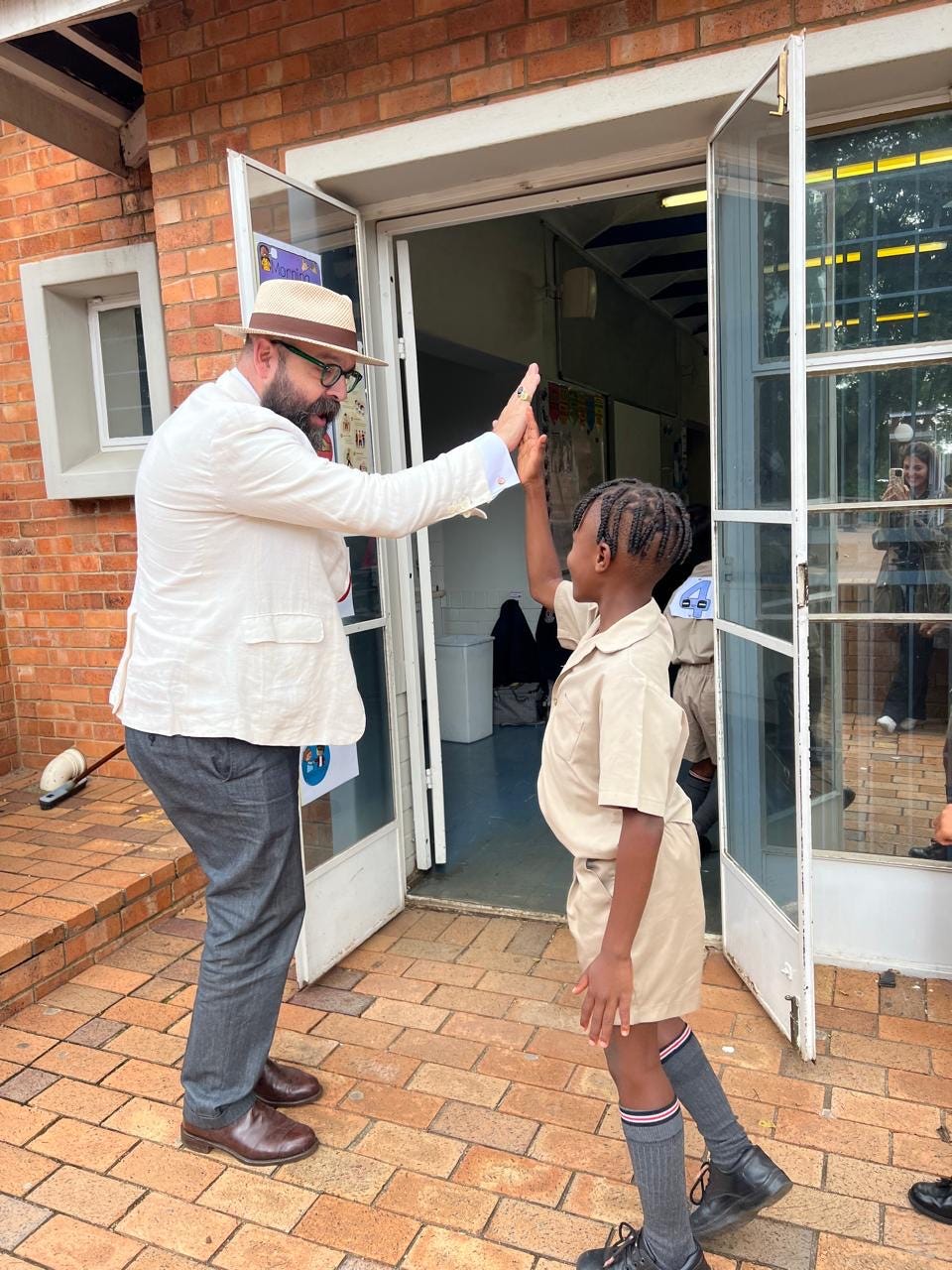
Phil is a change maker.
But he’s also someone who cultivates change makers in others. Whether through his research institute CIRCLE Education, the global education consultancy a School for tomorrow., or the widely listened-to Game Changers podcast, Phil’s work centres around a conviction that education should be designed not just to produce achievement, but to foster the kind of character that helps young people thrive in their lives and contribute meaningfully to their world.
In Phil’s own words, here’s why this matters and why change is possible.
Better outcomes?
I’ve spent the past decade working with schools, systems and communities across the globe to support better outcomes for more learners.
Through CIRCLE Education (our research institute), a School for tomorrow. (our consulting practice), and the Game Changers podcast (our public education platform with nearly one million listens), my mission, and that of my colleagues, has remained consistent: to help young people find their way into the future with confidence, purpose, and character.
But what do we mean by “better outcomes”?
And how do we know when we’ve achieved them?
For me, it’s about much more than academic success.
Don’t get me wrong, qualifications matter. But education should not be reduced to a game of credentials. The true measure of a school is not just how well its students perform on paper, but how well they are prepared for the game of life.
That’s where character comes in.
Why character?
Character is about how we live. It’s forged in the wrestling, between our inner values and the expectations of the world around us. It’s not something we possess once and for all; it’s something we develop, continually, through relationships, experiences, reflection, and action.
In my work, I’ve come to understand character through a series of questions that sit at the heart of a meaningful education:
Who am I?
Where do I fit in?
How can I best serve others?
Whose am I?
These are questions of identity, belonging, contribution, and purpose. They are the foundation stones of a life that matters; not just to the individual, but to the communities and worlds they inhabit.
Helping young people ask and answer these questions intentionally and with guidance is what we call an education for character.
And in today’s world, one marked by rapid change, increasing complexity, and deep uncertainty…. this kind of education is not a luxury. It is essential.
Educating character
An education for character deliberately prepares young people to develop the mindset, behaviours and capabilities they need to thrive in life, not just in school.
This means equipping learners with what we call the adaptive expertise and self-efficacy to navigate change, overcome obstacles, and contribute positively to their communities.
To do this well, we need to design educational experiences that grow students in six essential graduate outcomes:
Good people, with the integrity to lead meaningful lives—developed through self-management and supported by school culture
Future builders, able to navigate complexity with authenticity—fostered through communication and cultivated by leadership
Continuous learners and unlearners, ready to evolve—nurtured through learning, curiosity and technology
Solution architects, capable of providing wise and sustainable direction—supported by problem solving and performance
Responsible citizens, who can balance local, regional, and global perspectives—enabled by planning, organising, and strategic thinking
Team creators, able to work inclusively and collaboratively—grounded in teamwork and realised through strong systems and cultures
When we align our educational systems to these outcomes, we move beyond schooling as a sorting mechanism. We begin to see school as a place of formation, not just instruction.
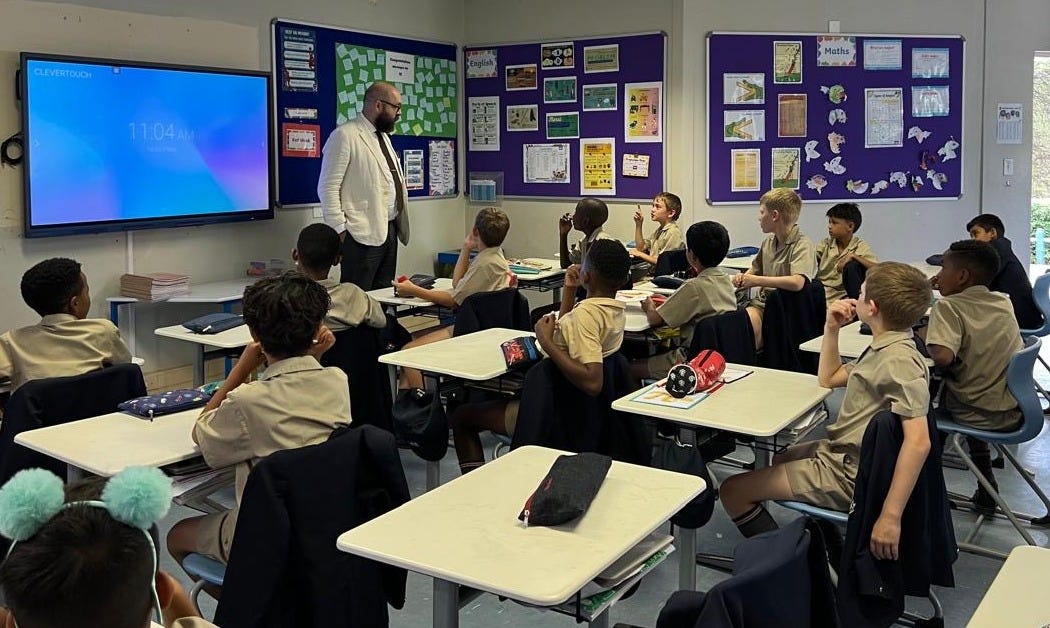
Eco-systems for character
To achieve this, we need schools that operate as learning ecosystems, environments that intentionally nurture the whole person and the whole community. These ecosystems are:
Human-centred: They place people at the heart of education—students, teachers, families, and leaders. They focus on wellbeing, growth, and the development of voice and agency.
Technology-enriched: They use digital tools to augment, not replace, human connection. Technology becomes a means of expanding possibility, not merely increasing efficiency.
People, place and planet conscious: They think beyond the classroom, considering the impact of education on society and the environment. These schools honour a new social contract: today’s learning for tomorrow’s world.
Intentionally purposeful: They are led by people who are equipped, empowered and enabled at all levels—
Personal leaders who are reflective and self-aware
Tactical leaders who value relationships and honesty
Strategic leaders who act with courage and hope
Global leaders with a deep sense of vocation and conviction
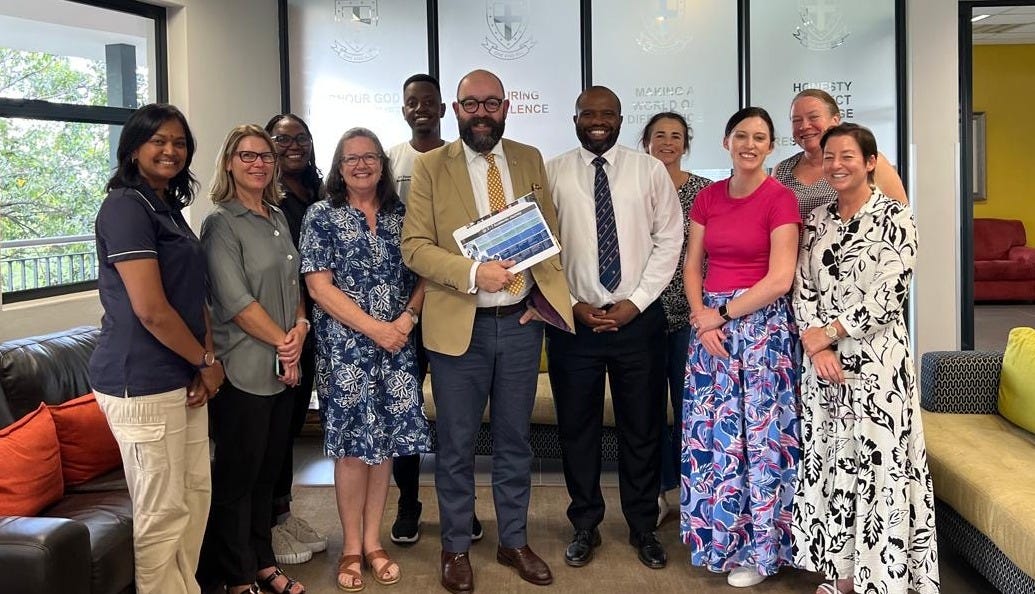
Our research shows that this transformation happens most effectively when we work in reverse. Start with leadership that is purposeful, then design systems that are sustainable and values-aligned. Layer in technology that enhances human potential. And finally, create schools that are deeply, authentically human-centred—homes of learning and wellbeing.
At the heart of these homes lies character.
Communities of character.
Because character is the whole work of a school. It’s not an add-on or a sideline. It’s at the core of our work in education. Character can through every lesson, every relationship, every practice and process.
Since 2016, the CIRCLE Global Character Education Research Program has reached hundreds of thousands of students, educators, and families across over 30 countries. What we’ve found is simple: when schools lead with character, everything else follows.
Character shapes culture. It influences outcomes. It provides purpose. It creates communities of belonging. It helps people discover who they are and how they can contribute to the good of others.
Belonging, fulfilment of potential, and doing good and right in the world—these are the outcomes we should be striving for. And they start with character.
That’s why I created the Character Education series, published by the outstanding team at Amba Press. These four student-facing guides, grounded in our research and fieldwork at CIRCLE and a School for tomorrow., offer structured, intentional pathways for young people to explore character, growth, and leadership:
A Life of Purpose – Exploring meaning, values, and what really matters
The Pathway to Excellence – Setting goals, building habits, and striving for your best
Leading for Tomorrow’s World – Learning to lead with integrity, courage and service
Make a Difference – Finding your voice and contributing to a better world
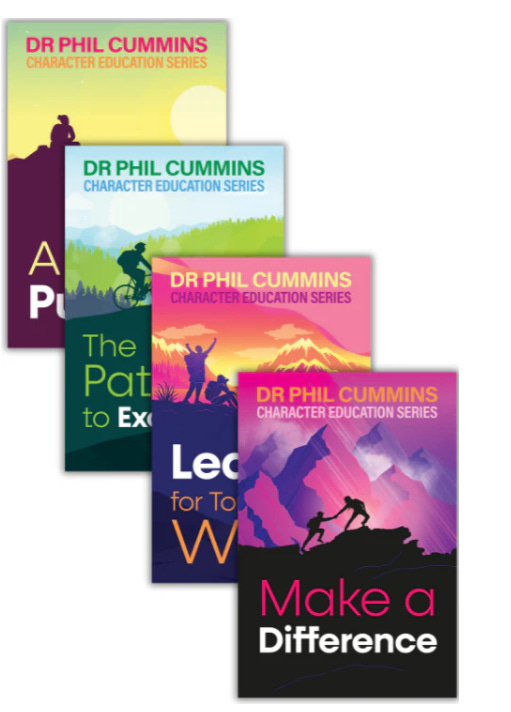
(Source: Amba Press, 2025)
Each guide is designed not just to be read, but to be used and to help students reflect, dialogue, and take action as they shape their futures.
Now, perhaps more than ever, we need young people of good character.
We need schools that are brave enough to place human flourishing at the centre of everything they do.
And we need educators who are willing to lead the way; not just as teachers, but as character apprentices and culture builders.
That’s why character matters. It always has. And it always will.
Connect with character (and Phil!)
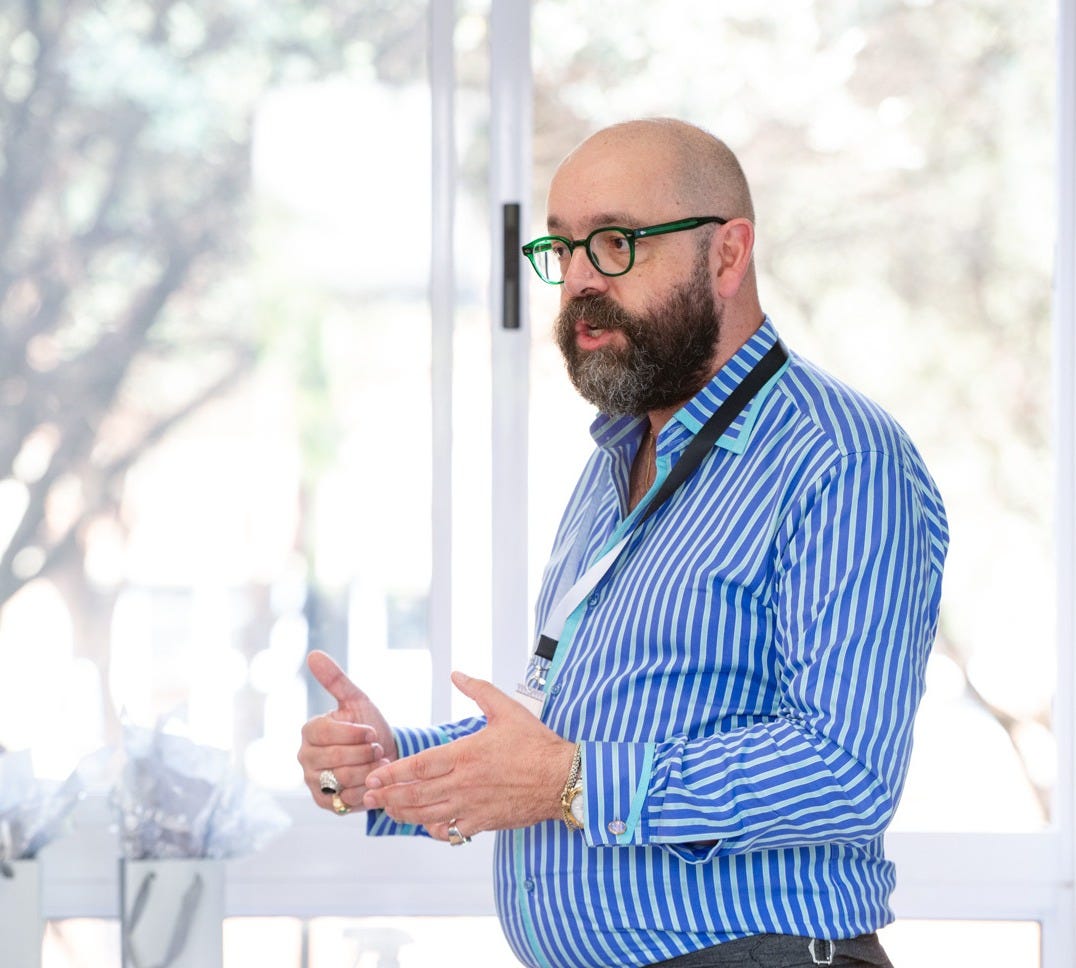
You can order the Dr Phil Cummins Character Education Series here:
Australia & NZ: Amba Press
Rest of the world: Amazon; Barnes & Noble; Booktopia
You can learn more about Phil’s collaborative work at www.aschoolfortomorrow.com.
You can also check out the Game Changers Podcast and hear the stories of bold pioneers from the world of education and enterprise, including one where Phil featured That Poverty Guy (Episdoe: @ThatPovertyGuy - Sean Harris)
Some of Phil’s work also features in Tackling Poverty and Disadvantage in Schools. You can find out more about this below.
