
Cuppa with a Change Maker
Emma: Rewriting chapters

☕🫖You pour the brew, I’ll provide the content
In these ‘Cuppa with a Change Maker’ blogs, I’ll feature a guest that is passionate about social justice and tackling educational inequality.
There are some conversations that remind you that a commitment to social justice is not always found in shiny slogans or national strategies; sometimes it can be heard in the relational work of simply helping children with less to navigate everyday. For example, like helping a child learn to read and enjoy books.
Reading is one of those things that can become almost invisible to those of us who use it every day. We read road signs, menus, timetables, job adverts, emails, instructions and books without always noticing the privilege of being able to do so. Yet for too many children and adults with less, reading remains a barrier.
That is why I was so keen to speak with Emma Bell, Chief Executive of Chapter One UK. I first met Emma through my work alongside the Fair Education Alliance. She brings a career shaped by human rights, health and work with vulnerable families. What links it all is a deep commitment to helping families with less thrive more. In this feature, Emma talks about reading not simply as an education issue, but a social justice issue.
I think this is such an important read because it challenges a lazy assumption that children’s reading is either a school problem or a parental problem. Emma invites businesses, volunteers, schools and wider society to play a part in helping children build both the will and the skill to read. Which seems rather fitting in Volunteers Week!
Over to you Emma :)
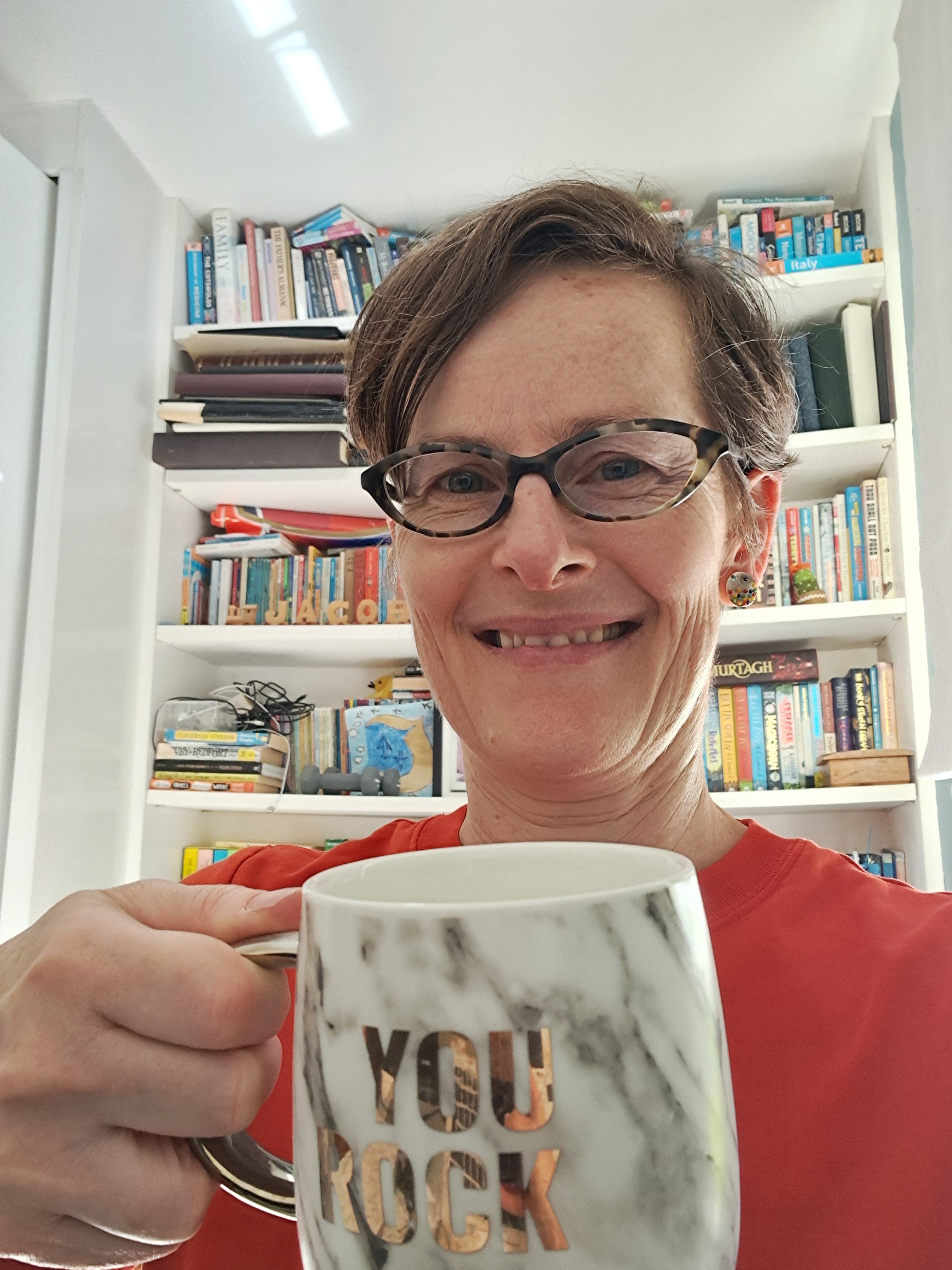
Hello, I’m Emma and I have the privilege of serving as Chief Executive of Chapter One. I enjoy a good story, and here is one I’d like to share with you today…
Throughout my career, I have always been drawn to work that supports vulnerable families, children and young people. I started out in the NHS, then worked in human rights in different parts of the world, before going on to lead a series of organisations, including an organisation supporting people that had experienced domestic violence.
A thread running through all of that work has always been the same, helping vulnerable families with less to thrive more. I have always been drawn to wanting to support and work alongside those navigating complex inequalities. Whilst the work isn’t without challenge or complexity, it feels deeply important in today’s world and amongst the many injustices we know are faced by others, especially those navigating financial barriers to learning or poverty-related barriers to living.
My story into reading came partly through serendipity. I ended up living in America, where I came across Chapter One’s sister organisation in the United States. I came to understand the model, began working with them, and now I lead Chapter One here in the UK. So, let me share with you why the work of Chapter One got under my skin and why I think it is an important part of understanding and tackling inequalities.
Reading justice
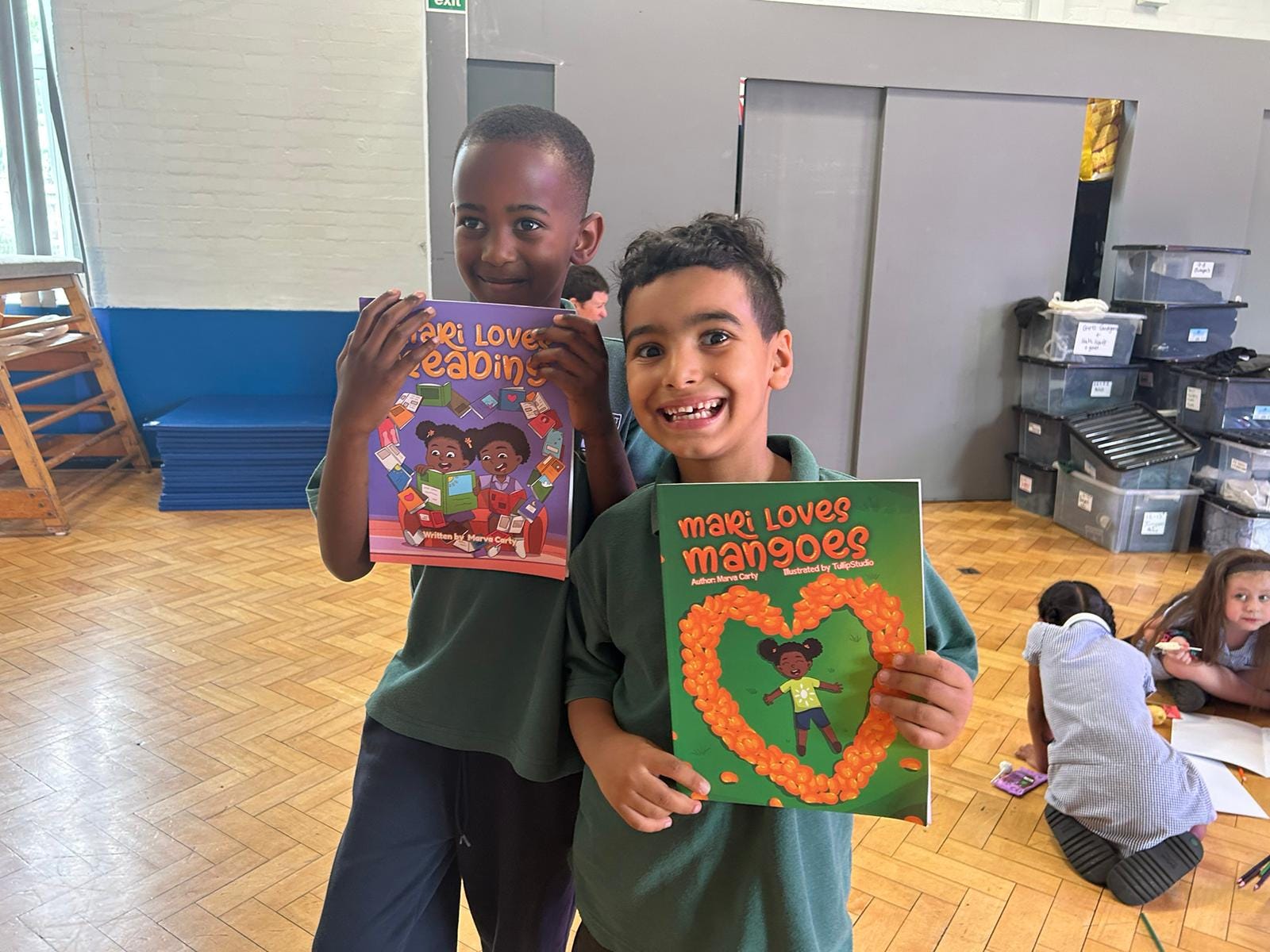
(Source: Chapter One UK)
At its heart, Chapter One’s work is driven by a simple but important conviction that reading is one of the most fundamental life skills we have. For me, and all of my colleagues at Chapter One, that makes it a social justice issue.
There are too many people, both children and adults, who do not have the opportunity to benefit from everything reading can offer. Research continues to demonstrate that for many children and young people, reading is not a readily available activity. Research from the National Literacy Trust showed that, in 2025, 9 in 10 (89.7%) children and young people aged 5 to 18 said they had a book of their own at home, meaning 1 in 10 (10.3%) did not have their own book. 1 in 8 (12.4%) 8- to 18-year-olds who received free school meals (FSMs) told researchers that they did not have a book of their own.
For too many children and young people, reading enjoyment levels also vary too much and this can be influenced by where they live. However, we know that inequality and poverty are a big part of this narrative. Again, research from the National Literacy Trust helps to illustrate some of this story.
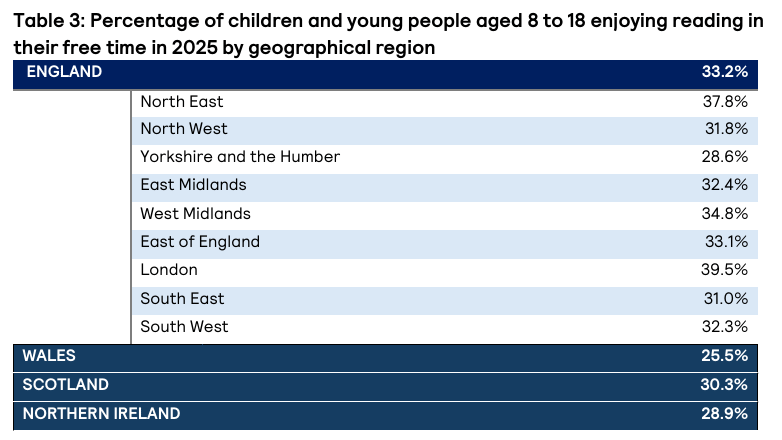
(Source: National Literacy Trust, 2025)
Yet, we all know that reading opens doors to learning, employment, confidence, independence, imagination and participation in society. Without it, the world can become much harder to navigate. That is why our focus is on children in primary school who are struggling on their reading journey. We work particularly with communities facing poverty-related barriers and disadvantage.
There is a wealth of evidence showing significant inequalities in reading and early language development before children even arrive at school. Children from different backgrounds, and in different parts of the country, can have very different levels of adult support, reading exposure and language-rich interaction around them.
So, by the time children enter Reception at the age of five, gaps are already visible. Sadly, those gaps can continue to widen as children move through primary school. For us, that is not just a literacy issue but a social justice issue.
We intentionally use the phrase “children facing disadvantage” rather than simply describing children as “disadvantaged”. This approach will not be without challenge and the term disadvantage is a complex one. But we do this to avoid deficit thinking and recognise children’s agency, potential and possibility. Many children face structural challenges, but that does not mean their outcomes are predetermined. The task is to support children to navigate those challenges, not to define them by them.
Opening my own story
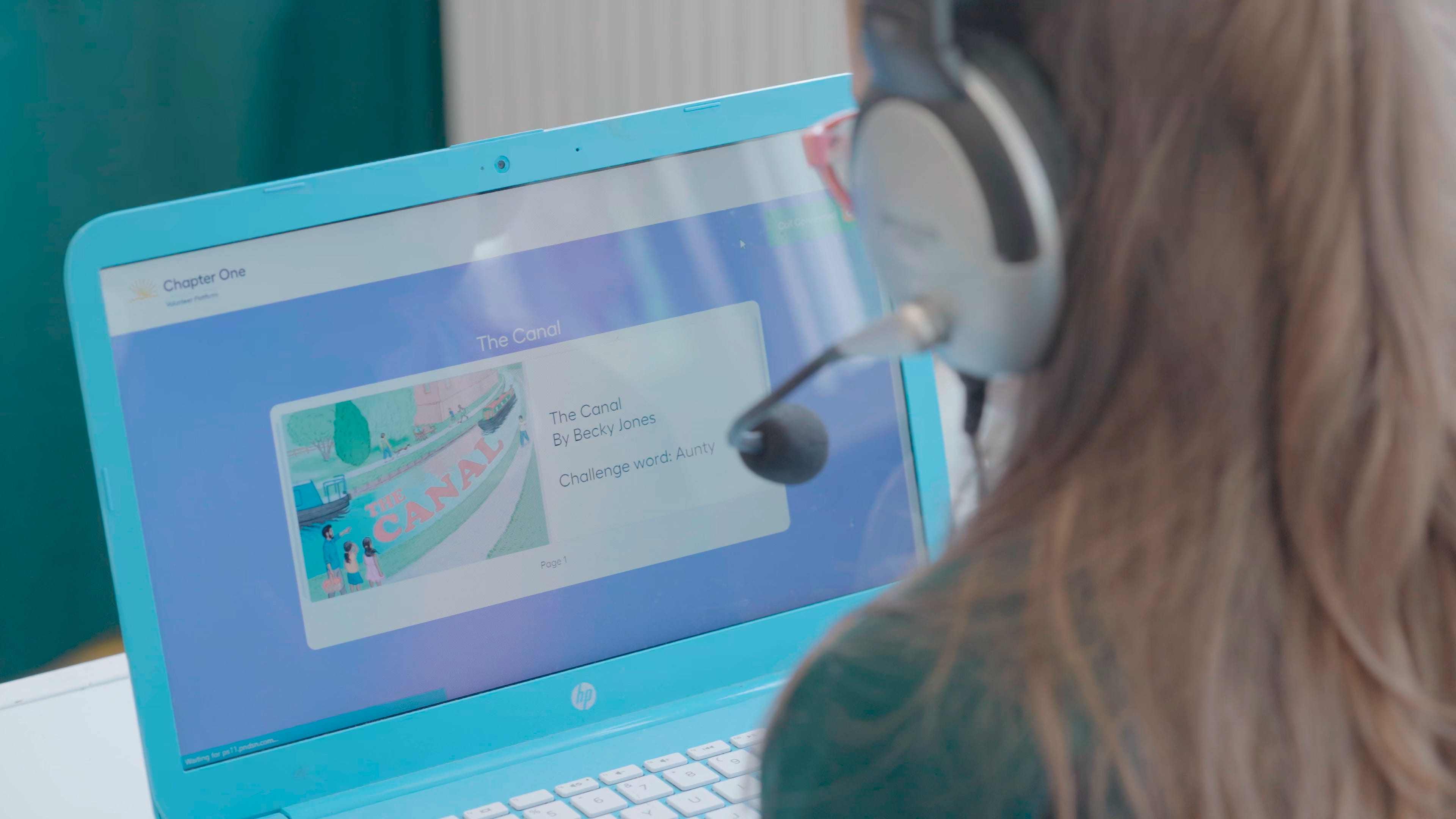
(Source: Chapter One UK)
I am a passionate reader myself. I have always understood reading as a fundamental life skill, but over time I came to understand it more clearly as a social justice issue too.
I met many adults who struggled with reading and saw just how challenging everyday life could be as a result. I was in awe of how they navigated the world, because words are simply everywhere. They are on documents, surveys, buses, phones, medicines, job applications, school letters and public notices. To manage all of that without being able to read confidently is an extraordinary act of resilience and one which demands our attention. It really opened up my own eyes to the challenges of it too.
I then had my own children, and that refreshed my understanding of the fact that learning to read is actually really complex! It is also full of betrayal!
Children start learning phonics and are told that certain sounds match certain letters. Then, a few weeks later, many discover that this was only part of the picture. Suddenly, the same letters can make different sounds, and different letters can make the same sounds. For some children, that journey can feel confusing, frustrating and disempowering. This will often be the case with children facing poverty-related barriers to learning or access too.
This is why I feel so strongly that children need multiple adults around them who can help carry them through the reading journey. It is brilliant when children have family and friends who can do that, but not every child has access to this reality. We also need to be careful here that we don’t blame parents, carers or families for this. For adults navigating limited literacy skills and holding down multiple jobs and challenges, it is simply too much to expect all of these skills to grow in the home environment.
That is where I became deeply invested in supporting both the will and the skill to read. Children need the technical skills, but they also need encouragement, confidence, identity and relationships. They need adults who will show up, read with them, and help them believe that reading can belong to them too. This is an important part of both our mission but also our response at Chapter One. So, if you love books and want to help others, then this next segment may be particularly important for you!
Reading volunteers and more
(Source: Chapter One UK)
At Chapter One, we provide a range of programmes designed to help children develop both the will and the skill to read. This is a vital part of our work, but I want to share these as examples of how social justice translates to the page of practice!
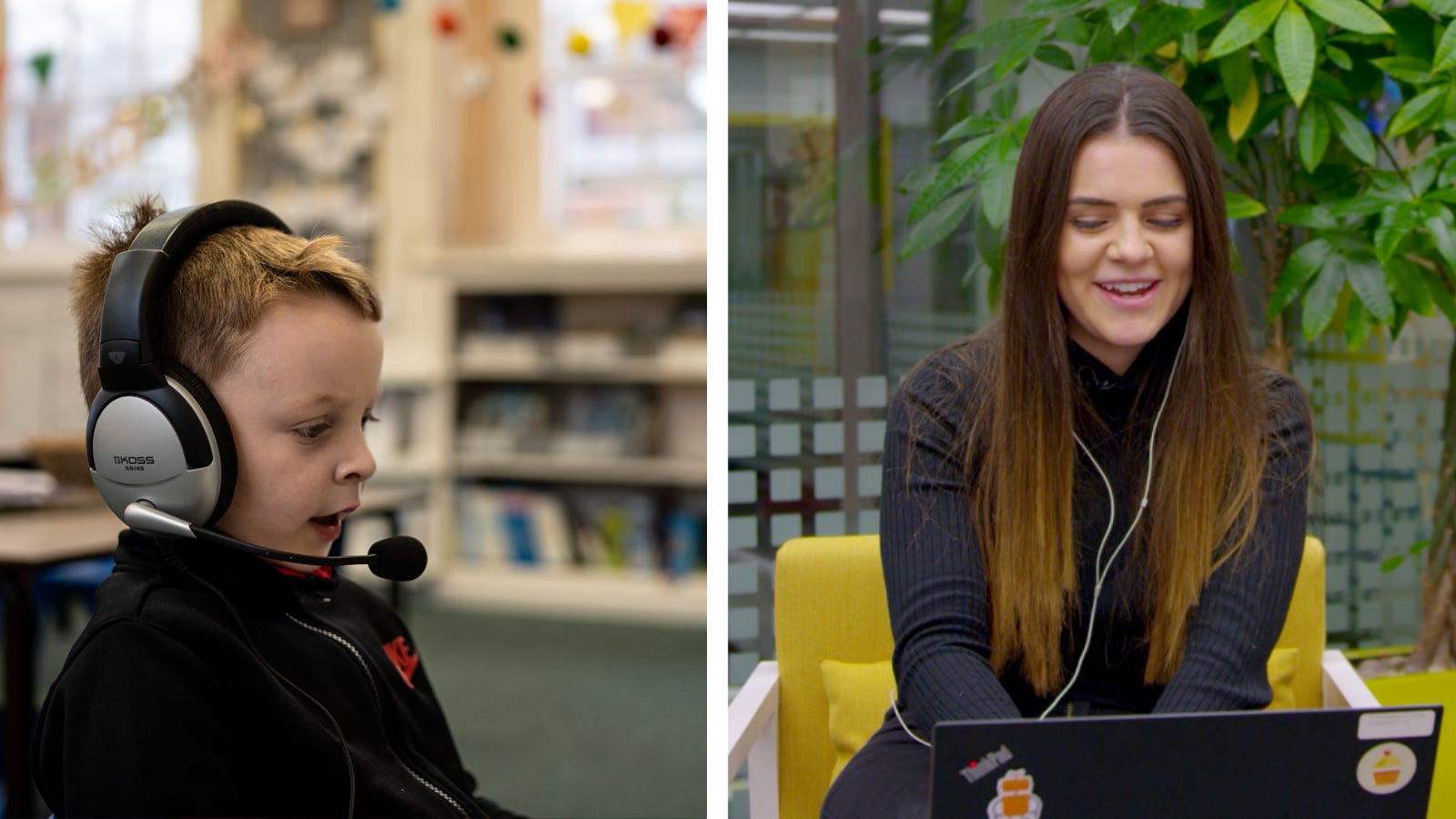
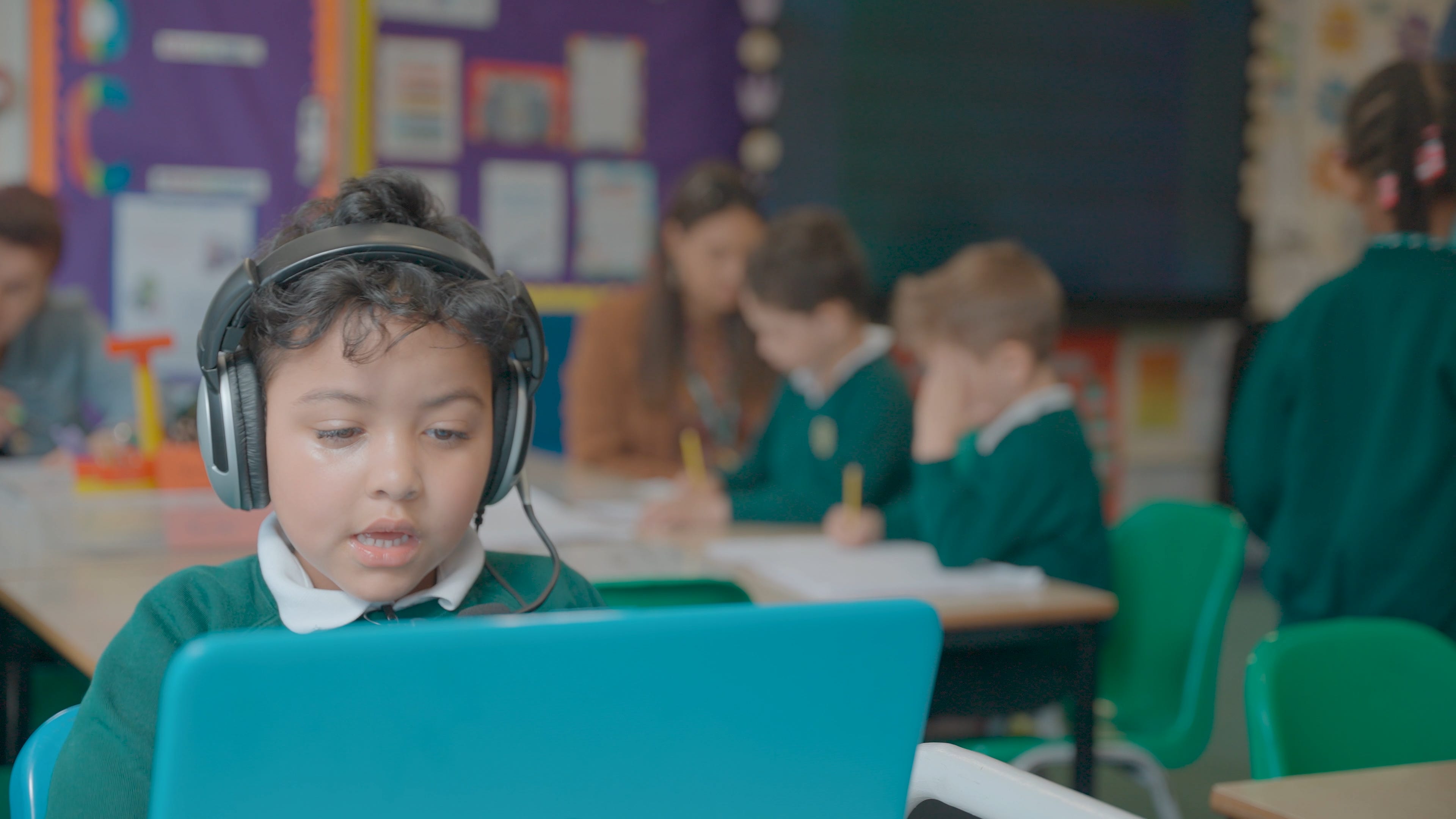
Our biggest and longest-standing programme is our Online Reading Volunteers Programme. This brings together thousands of adult volunteers, many from the business and industry sectors, who give half an hour a week to read with a child who is struggling. That 30-minutes goes a very long way!
The model works because it is simple, sustained and flexible. Volunteers can connect from wherever they are working, using an online platform, and support a child in one of the 13, soon to be 14, areas where we work. For schools, the programme is deliberately light touch. It is integrated into classroom life and resources are provided. There are no onerous expectations around taking children to special rooms or setting up complicated systems. For us, careful and sustainable implementation is a really important part of getting this right in busy school environments. It is also popular with businesses, because many adults want to do something meaningful and sustained for a child, but find it difficult to fit volunteering around work.
Our second programme is our Early Literacy Intervention. This focuses on the very early reading experience. Most children learn to read using phonics and an established school scheme, but not every child gets on with the scheme in the same way or at the same pace.
Teachers are doing an incredibly difficult job, but it can be hard to provide daily one-to-one support when a child begins to fall behind. Our model pairs a technology platform with specially trained early literacy interventionists, who go into schools and provide short, focused, one-to-one sessions every day. The aim is to help children keep up before gaps become more entrenched.
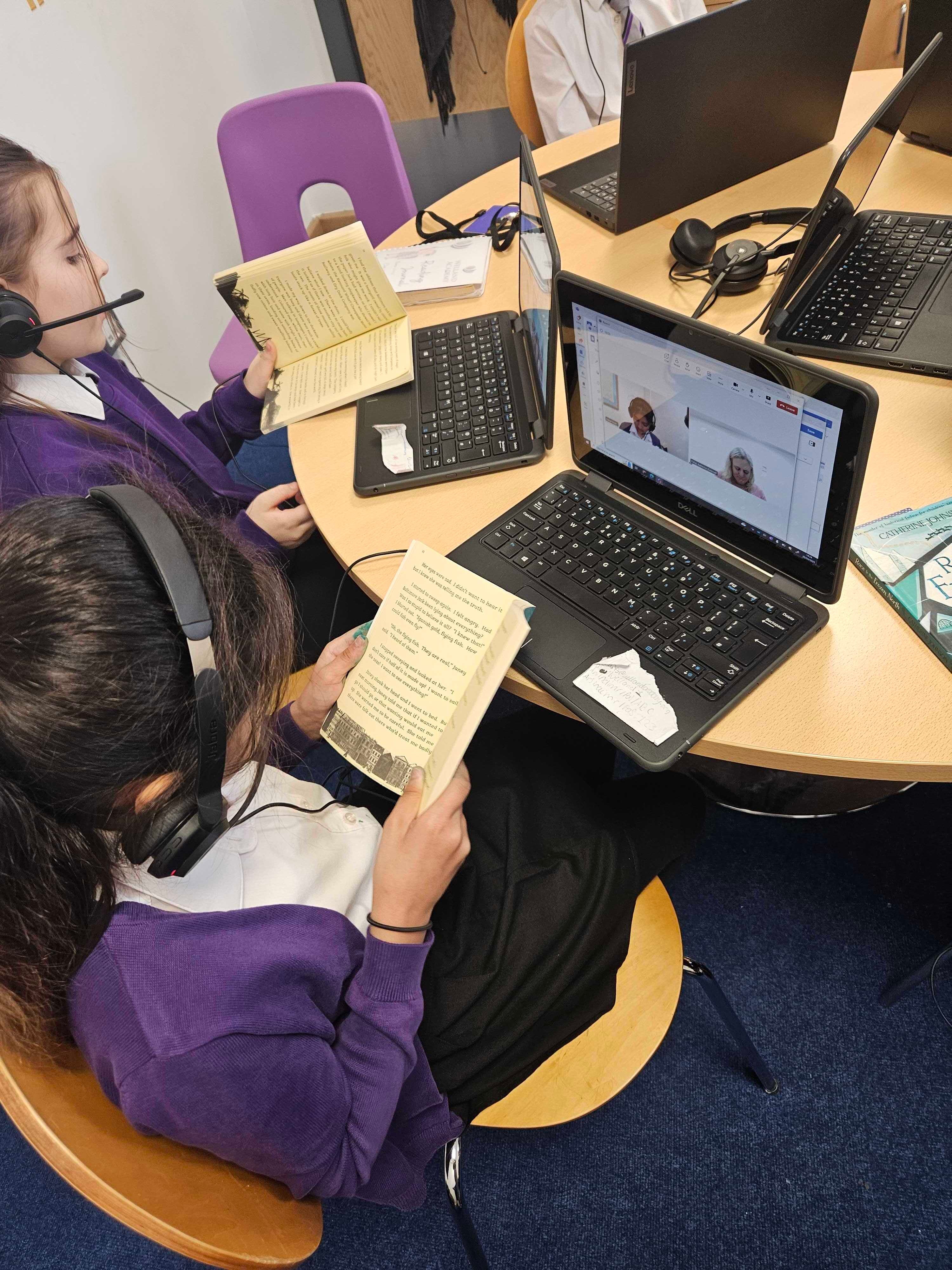
Our third programme is more recent and focuses on older primary children who can read but are choosing not to. Schools told us they had children in Year 4 and Year 5 who technically knew how to read, but were not reading. As a result, the gap between them and peers who were regular readers was growing. So, we developed a highly bespoke book club model, rooted in evidence around choice, motivation and reading identity.
This is not an adult-style book club where everyone is given the same book and sent away to read it. It is much more discursive. Children choose from a variety of texts, bring other texts into the conversation, and are encouraged to develop opinions and preferences. Many children tell us they had never really thought reading could be fun. For them, reading was homework. It was something done to them or required of them.
In our book clubs, something changes. An adult says: “Tell me what you think.” And if a child does not like a book, that is okay. We can put it down and find another one. Figuring out what you do not like can be almost as important as figuring out what you do like. For a child who may feel disempowered by the system, that sense of choice can really matter.
More broadly, our mission is to bring wider society into the world of reading. We cannot, as a nation, say that the decline in children reading for pleasure is all a school problem. Nor can we say it is all a parent problem. It is a shared challenge, and we need a much wider coalition of people and organisations to respond to it.
There is real potential in the business and industry sector here. The UK has strong structures around social value, including expectations that businesses bidding for public contracts demonstrate impact in communities. If we can harness that, and support adults within those businesses to offer sustained reading support to children, then we have something very powerful. It builds social value into the ordinary structures of business. That gives me hope.
Rewriting stories
(Source: Chapter One UK)
We have strong data showing improvements in children meeting age-related expectations after receiving our support. We also see progress in confidence, motivation and enjoyment. Alongside the quantitative data, we have powerful qualitative evidence from children, schools and volunteers. But for me personally, the most hopeful thing is the wider mission and ideas behind this work.
We all have a role to play in rewriting our nation’s current reading ‘story’. Adults outside the family and school setting can be a powerful force in supporting children’s reading. They can help children practise, enjoy reading, build confidence and see themselves as readers. This is important because reading carries a dividend; it supports children to live happier, healthier lives full of opportunity. When a child becomes a reader, they gain more than a skill. They gain access to knowledge, imagination, independence, inspiration and, ultimately, to hope.
Further links
You can find out more about Chapter One’s work here. Please do reach out to me directly by replying to this email if you would like an introduction.
Chapter One Online Reading Volunteers Programme
Chapter One Early Literacy Intervention Programme
Chapter One Impact Report 2024-25
🫖 Fancy a cuppa?
Could you be one of my next guests?

Here's a link that will take you to a quick form about the blog series. I'll be running 1-2 a month, so I would love to add prospective authors to the schedule.
Please do pass the link on to other change makers you might know of.
Ideas for content might include:
Particular project making a difference to the lived realities of hardship for others
Innovative approaches to understanding and/or tackling inequalities
Signposts of further support, free resources etc on a specific issue
Ideas or examples do not have to be school based
I’m happy to promote approaches, strategies and ideas, but avoid using the blog as a sales pitch for a particular product or traded offer please! (By all means signpost an offer if you think it helps)